


10 things to know about the UK’s Emergency Alerts system
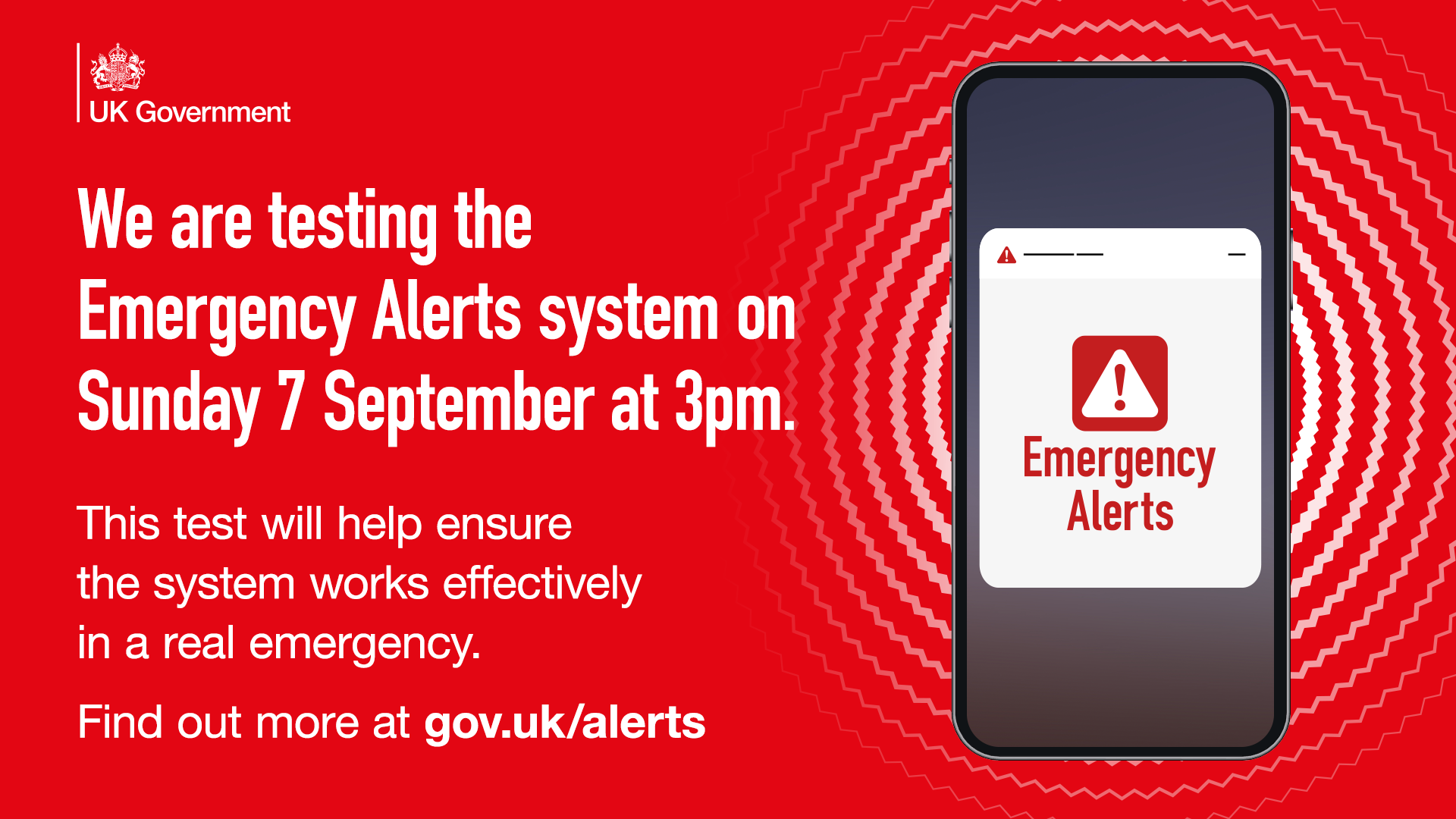
Emergencies, such as flooding, fires, and public health crises, can impact our lives when we least expect it and when they do, every second counts. To ensure public safety when it matters most, this Sunday (7th September 2025) at 3pm the UK Government will be running the second nationwide test of its Emergency Alerts system.
All UK mobile operators are supporting the Government with the test, which is designed to help everyone familiarise themselves with Emergency Alerts and how they work.
We are proud to be supporting this public safety initiative as part of our ambition to be UK’s most trusted connector of people and businesses. To ensure our customers understand what to expect during the test, here’s ten things you need to know about the UK’s Emergency Alerts system:
1. Emergency Alerts are designed to help protect lives and property.
Emergency Alerts enable government agencies and the emergency services to send early warnings to people about life-threatening situations in their local area, including severe flooding, fires, and public health crises, via their smartphones and tablets.
Since the first national test of the system in April 2023, five Emergency Alerts have been sent by the Government and emergency services to help protect people and property across the UK, including during major storms.
For the test on the 7th September, you won’t need to take any action and can simply clear the alert notification.
2. Emergency Alerts are broadcast via mobile phone masts to specific areas.
The system works by using the UK’s mobile network infrastructure to send the same emergency message to all compatible devices in a specific area, warning them of any danger and providing steps on how to stay safe. For the nationwide test in September, the alert will be broadcast by all mobile operators across the UK.
The service only broadcasts one-way using mobile masts and does not require your phone number, collect data, or track your location or movements. You do not need to modify location settings on your phone and switching off location settings will not affect your ability to receive them. The system does not require an app to be downloaded and is completely free for everyone.
3. Emergency Alerts have a unique sound which is different to other notifications.
Emergency Alerts – including the upcoming test notification – have been purposely designed to look and sound very different to other types of messages customers may receive, such as SMS text messages. When an alert is sent out, your mobile phone or tablet will vibrate and make a siren-like sound (even if it is set to silent) for approximately ten seconds. It is important customers read the message carefully and follow any instructions.
Depending on your phone’s features, the alert will work with screen magnification and may also read the message out loud. Importantly, the unique noise emitted by the phone will also be audible for those who use a hearing aid.
The National Centre for Domestic Violence has advised people with concealed devices to make sure they are turned off for the duration of the test, so as not to receive the alert.
4. Emergency Alerts can only be issued by the UK Government or local emergency services.
Emergency Alerts will only ever be issued by the UK Government or emergency services. No other organisation – including your mobile network operator – can send an Emergency Alert.
If you are ever unsure if an alert is genuine, you can check it by visiting gov.uk/alerts.
5. You do not need mobile data or a Wi-Fi connection to receive an Emergency Alert.
Your mobile phone or tablet does not have to be connected to mobile data or Wi-Fi to receive an Emergency Alert – including the test notification.
Customers using devices connected to any of the UK’s 4G and 5G networks will receive it, unless the device is switched off or on airplane mode. Anyone using older ‘feature’ phones on outdated 2G networks – which the Government has committed to see phased out in the coming years – will not be able to receive Emergency Alerts.
The overwhelming majority of our mobile customers already use 4G/5G compatible smartphones so will receive the test notification and any future Emergency Alerts impacting their local area.
6. Emergency Alerts can be sent in multiple languages.
While English will be the primary language used for all Emergency Alerts in the UK, the Government or emergency services may decide to send an alert in multiple languages. For example, during the previous nationwide test in April 2023, the Government delivered a bi-lingual alert (English and Welsh) to people located in Wales.
7. Emergency Alert systems are already used in countries around the world.
The successful implementation of the UK’s Emergency Alert system follows in the footsteps of other international nations who have adopted similar technologies – including the USA, Netherlands, Canada, New Zealand, Finland, South Korea and Japan. Many of these countries also test their system regularly, either annually or monthly.
8. Emergency Alerts are just one tool the Government will use to communicate to the public in an emergency.
Emergency Alerts are just one of many tools the Government uses to communicate with the public about emergency situations, but it will not replace updates on local news, radio, television or social media.
9. Emergency Alerts can be broadcast for as long as they are needed.
Depending on the severity of the emergency, Emergency Alerts can be regularly broadcast over an extended period, ensuring people whose phones are switched off, on airplane mode or out of battery will still receive it – if needed – once they reconnect to their mobile network.
However, the nationwide test alert on Sunday 7th September will only be broadcast for a very short window of time to people across the UK.
10. The Government has made lots of information available to people who want to know more about Emergency Alerts.
To learn more about the UK Government’s Emergency Alerts service, head to gov.uk/alerts.
You can opt out of emergency alerts, including the national test, but you should keep them switched on for your own safety.


